
Last updated November 2, 2026
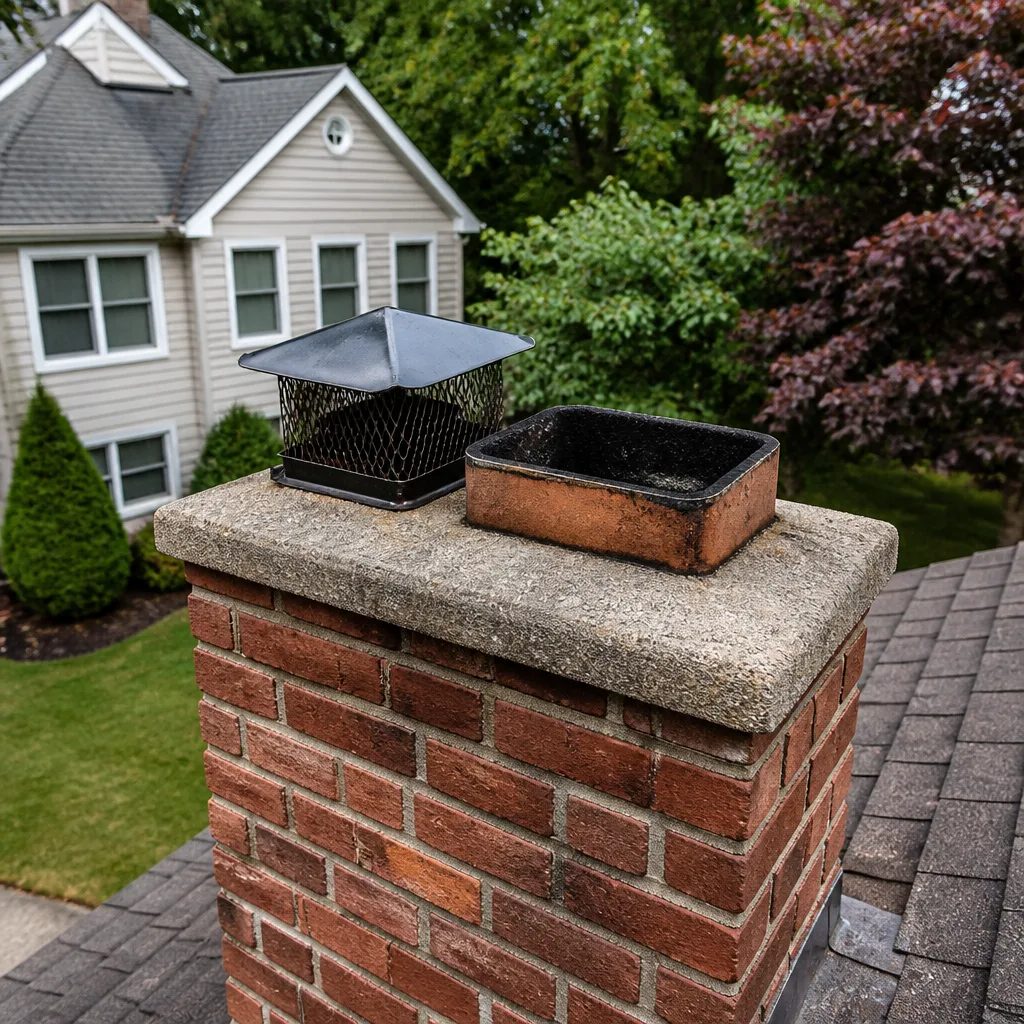 Sweep & inspection
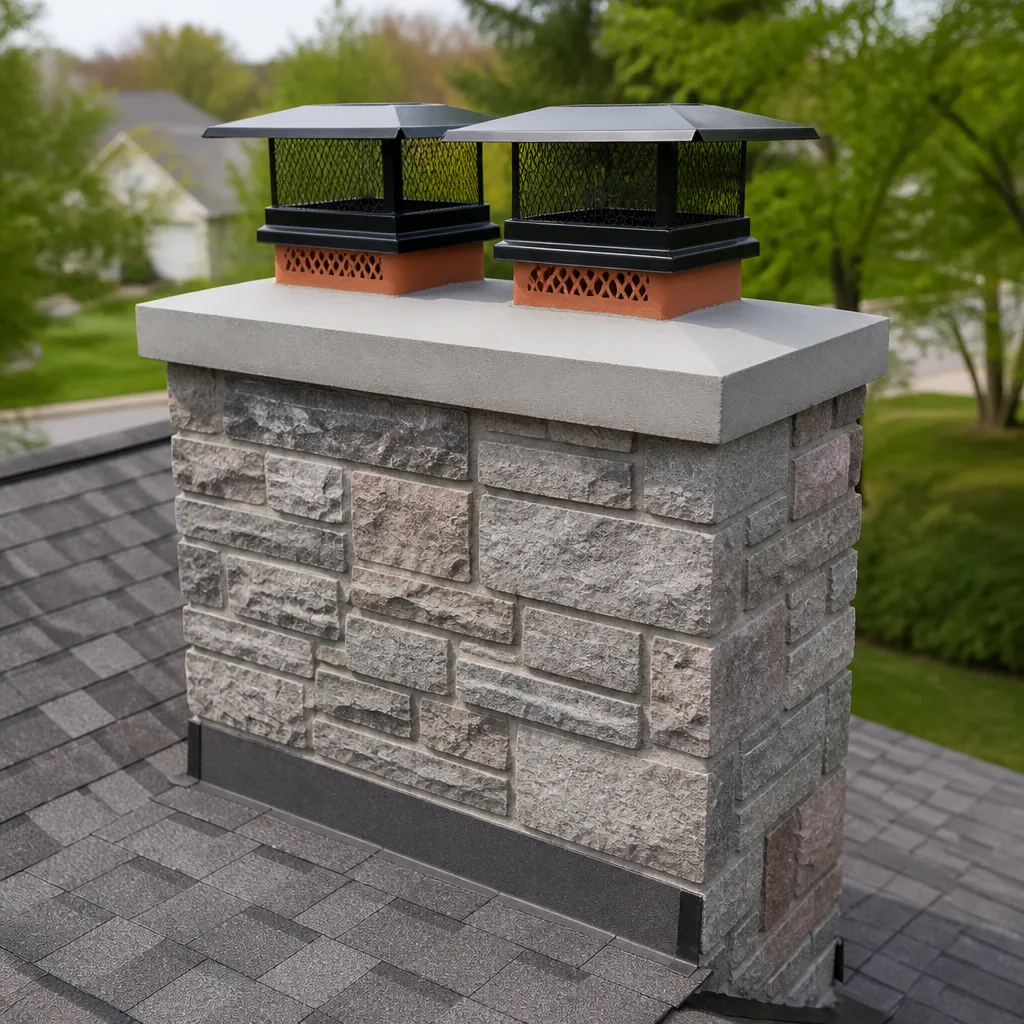 Caps & crowns
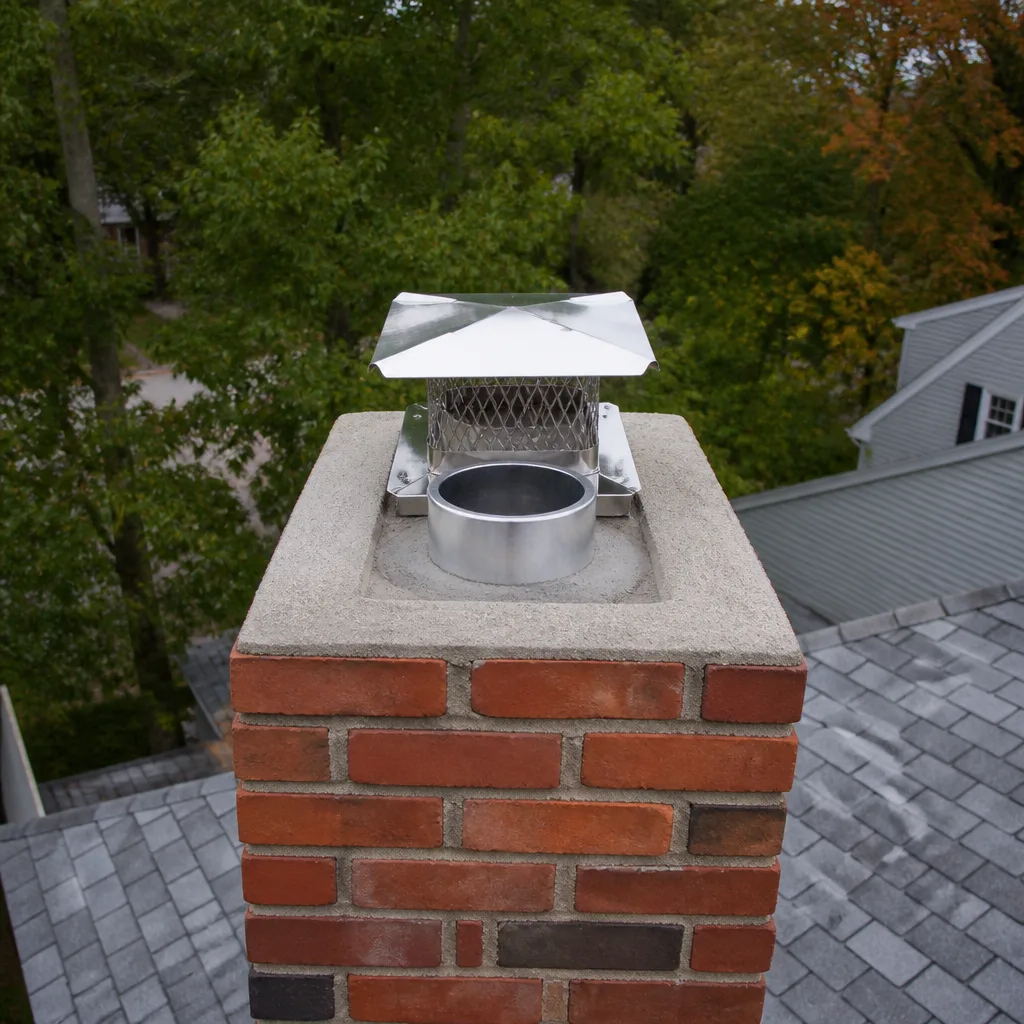 Flue relining
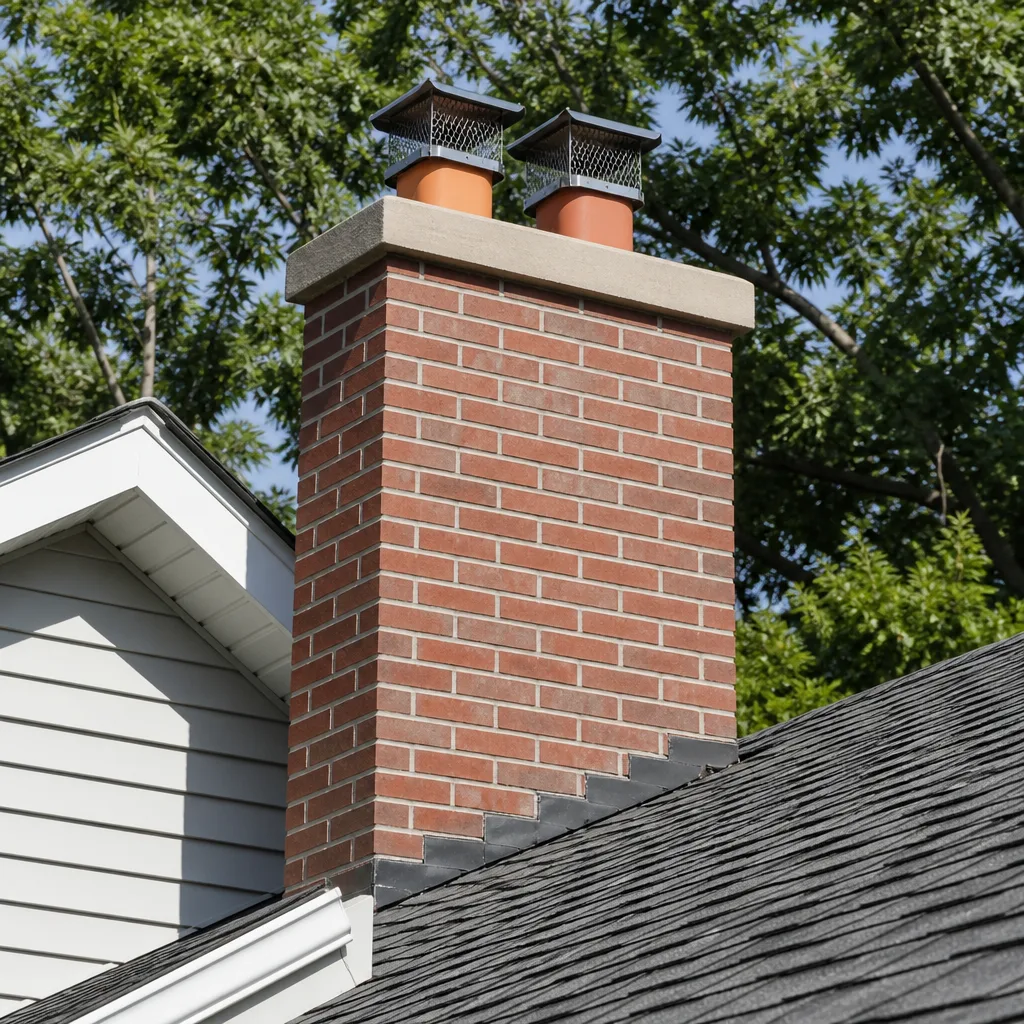 Masonry repair
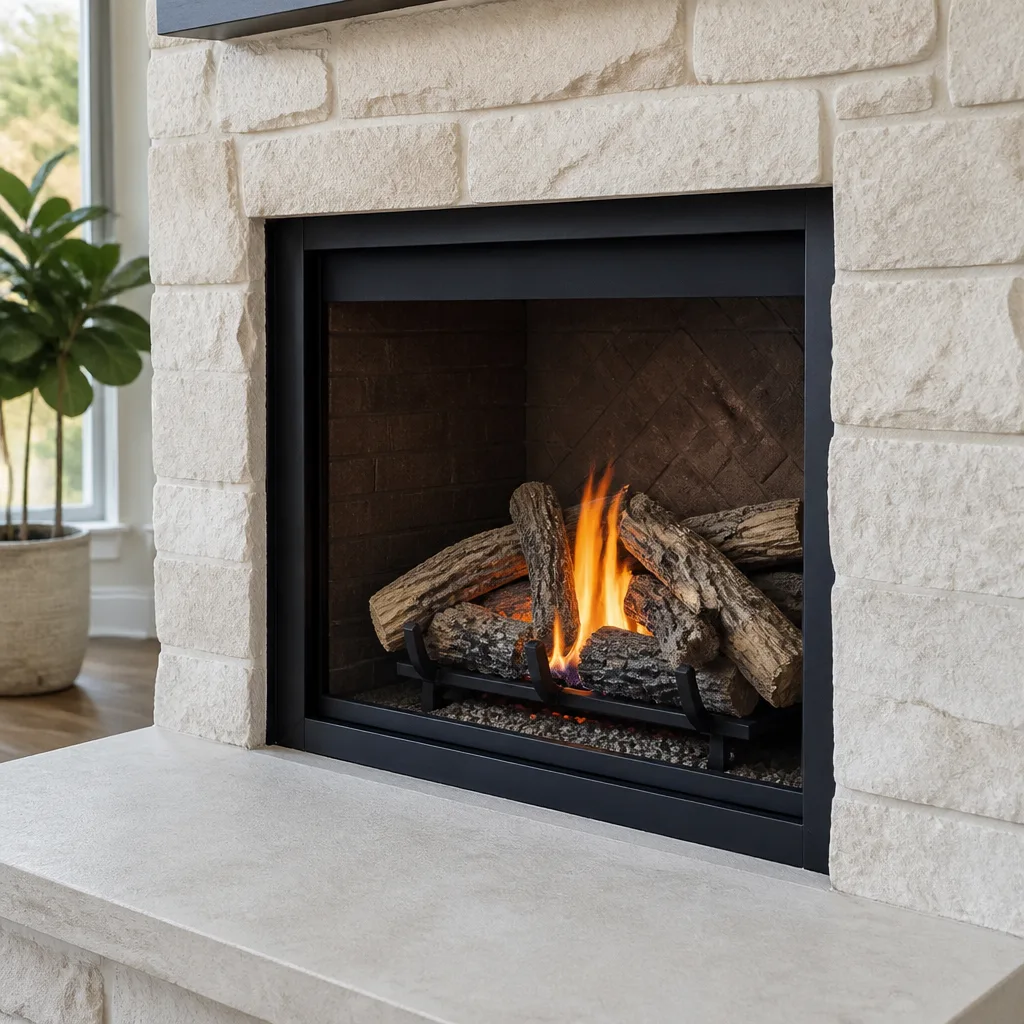 Gas fireplace service
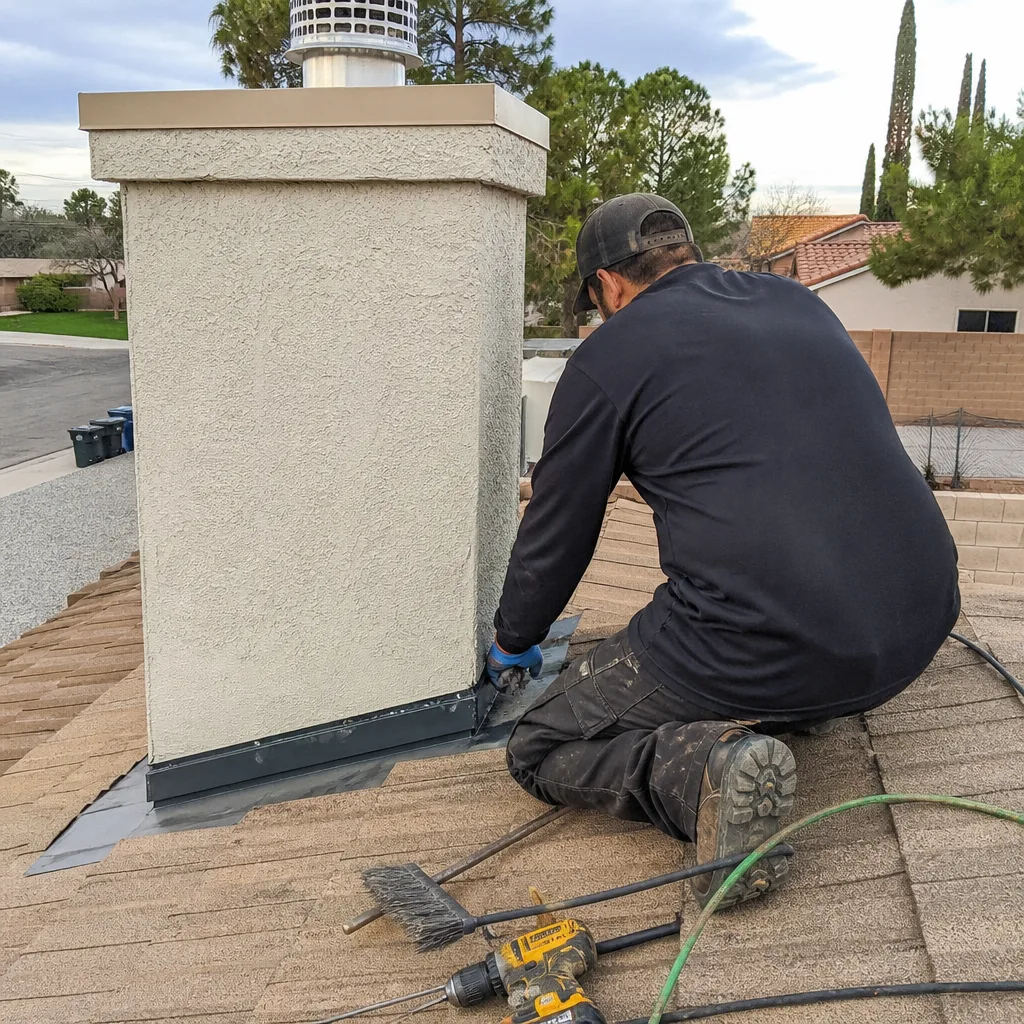
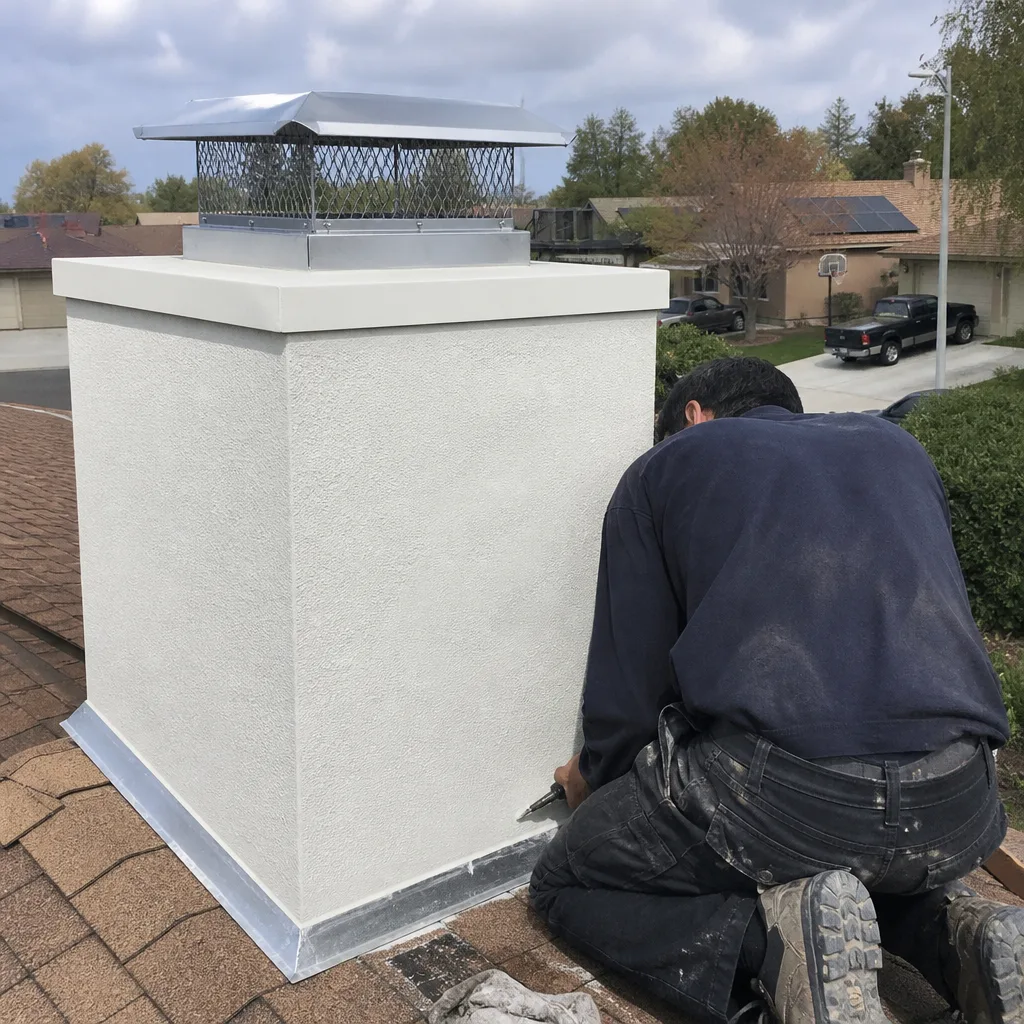
Level 1 sweep and inspection to the NFPA 211 annual standard - flue, crown, cap, and flashing checked and photographed
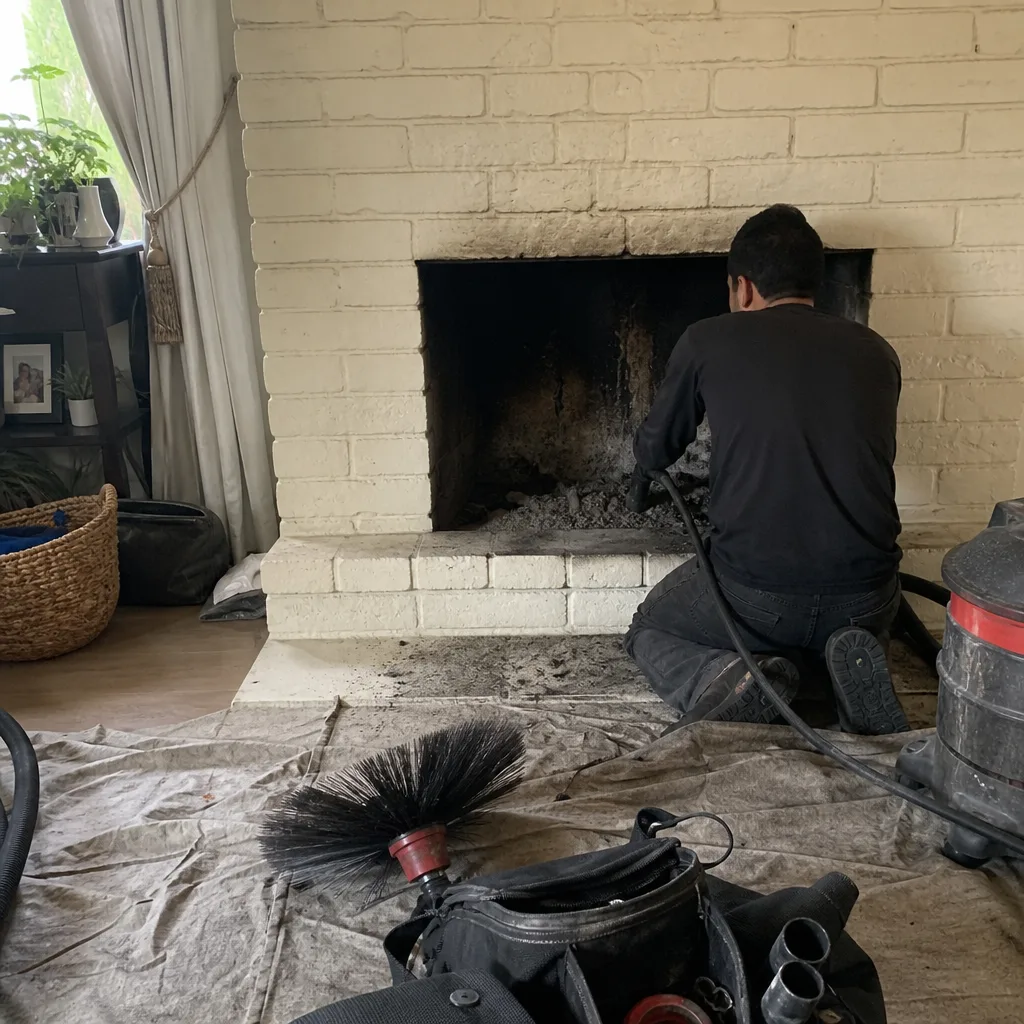
Chimney sweep logs do not sweep chimneys. They loosen some creosote - which then falls where a brush and vacuum still have to collect it.
Chimney Cleaning Warning Signs: A Lancaster Homeowner’s Reference Guide
A white stain on your chimney’s exterior brick isn’t cosmetic. It’s called efflorescence, and it means water is moving through your masonry. By the time it’s visible outside, the damage is already happening inside. Lancaster homeowners face a particular set of chimney risks because of our climate: hot, dry summers that bake mortar until it cracks, followed by cold desert winters that force moisture into every gap, where it freezes, expands, and widens the damage. This guide teaches you to read the specific physical signals your chimney, firebox, and home interior are sending before a manageable issue becomes a structural or fire-safety emergency.
Quick Answer
A chimney that needs attention announces itself through visible signals: white mineral staining on exterior brick, smoke that lingers in the room instead of flowing up, a damper that won’t open or close smoothly, unusual odors from the firebox, flaking or spalling brick faces, and dark creosote glaze on the flue walls. Some of these signs mean schedule a sweep at your convenience. Others mean stop using the fireplace today. The difference comes down to whether the signal points to routine buildup or to compromised structural integrity or active blockage, both of which can put a home at risk for fire or carbon monoxide exposure.
Styles & brands we work with
- Sweep & inspection
- Caps & crowns
- Flue relining
- Masonry repair
- Gas fireplace service
Table of Contents
- Efflorescence: The White Stain That Isn’t Cosmetic
- Smoke That Clears vs. Smoke That Lingers: Reading Your Draft
- The Damaged Damper: What It Looks, Sounds, and Feels Like
- Three Smell Signatures: Creosote, Animals, and Moisture
- Masonry Deterioration: Aging vs. Active Damage in Lancaster
- Creosote Buildup: The Fire Hazard You Can’t Ignore
- Monitor-and-Schedule vs. Stop-Using-Immediately
- Common Mistakes to Avoid
- When to Call a Professional
- Frequently Asked Questions
1. Efflorescence: The White Stain That Isn’t Cosmetic
Efflorescence looks like someone dusted your chimney with chalk. It forms when water moves through masonry, dissolving the natural salts inside the brick and mortar, then deposits those salts on the surface as the water evaporates. The stain itself is harmless to touch. The water movement behind it is not.
In Lancaster, the thermal-expansion cycle is relentless. Summer daytime temperatures regularly pass 100°F. Winter nights dip below freezing. Every 24-hour cycle of expansion and contraction stresses mortar joints and brick faces. When hairline cracks form, water enters during the occasional rain or even from morning dew accumulation on north-facing surfaces. That moisture then migrates through the wall, carrying salts with it, and you see the result as a white chalky film.
What efflorescence tells you:
- Water is penetrating the chimney’s exterior. The waterproofing barrier, if one existed, has failed or was never applied correctly.
- The freeze-thaw cycle in Lancaster winters will widen every gap that moisture has entered. Cracks do not self-heal. They compound.
- Efflorescence on the interior side of a chimney, visible inside the attic or upper-floor wall, indicates the leak is moving through the full masonry thickness, not just surface moisture.
One clarifying point: new brickwork sometimes shows temporary efflorescence as construction moisture works its way out. That releases and stops. Chronic efflorescence that reappears after rain or persists through dry months means the masonry is actively wicking water. In our experience with Chimney Repair in Lancaster, this is the point where repointing and waterproofing should be on the table, not after the brick faces have begun to flake away.
2. Smoke That Clears vs. Smoke That Lingers: Reading Your Draft
Understanding smoke behavior inside your firebox is the single most useful diagnostic skill a homeowner can develop. The question isn’t whether some smoke enters the room when the fire first starts. It’s how long it hangs around and what it smells like.
Smoke that clears in seconds is normal. When a cold chimney meets a young fire, the air column inside the flue hasn’t warmed enough to generate the upward pressure difference called draft. A brief puff of smoke rolls into the room, the flue warms, the draft establishes itself, and the smoke disappears. This is annoying but benign.
Smoke that lingers is a problem. If smoke sits in the room for minutes, clings to furniture, or stings your eyes after the fire has been burning for 20 minutes, the chimney is not venting properly. The causes, in order of how often we see them in Lancaster:
- Flue obstruction – creosote buildup, animal nests, or fallen debris from deteriorated brick have narrowed or blocked the passage. A blocked flue doesn’t create zero draft. It creates unpredictable, dangerous draft that can reverse without warning.
- Negative air pressure in the house – Lancaster homes get sealed tightly for air conditioning efficiency. Kitchen exhaust fans, bathroom fans, and even whole-house fans pull air out of the home so strongly that the chimney becomes the make-up air intake. The draft reverses. Smoke comes in.
- Undersized flue for the appliance – if a gas insert or converted wood stove was installed with the existing flue rather than a properly sized liner, the venting math doesn’t work. Smoke cools too quickly in an oversized flue, loses upward velocity, and stalls.
- Competing chimneys – in two-story homes, a second fireplace on a different floor or a strong wind hitting one chimney while another is in use can create pressure imbalances. This is particularly visible on windy days in the Antelope Valley.
The distinguishing test is what happens when you open a window near the fireplace. If the smoke immediately clears and the draft improves, the house is starved for combustion air. If the smoke persists with a window open, the problem is inside the chimney itself.
3. The Damaged Damper: What It Looks, Sounds, and Feels Like
A damper is a metal plate, usually made of cast iron or steel, that sits inside the throat of the chimney just above the firebox. It opens to allow smoke out when you use the fireplace and closes to stop conditioned air from escaping when you don’t. It’s a simple mechanism, and it should feel simple. If it doesn’t, the damper is trying to tell you something.
What a healthy damper feels like from inside the firebox:
- Smooth, even resistance when you push or pull the handle. It should move with one hand and hold its position.
- A clean clank or thud when it seats closed. The sound should be solid metal on metal, not tinny or rattling.
- An even gap around the edges when open. You shouldn’t be able to see light through one side and corrosion through the other.
What a compromised damper feels, looks, and sounds like:
- It fights you. If the handle is stiff, grinds, or needs two hands, the pivot joints have likely rusted or the plate itself is warped. Forcing it can snap the handle, which turns a repair into a more expensive one.
- It sounds wrong. A rattling sound during wind means the damper isn’t seating fully. This lets heated air escape all winter and gives downdrafts a direct path into the living room.
- It looks crusty. Standing water from a failing chimney cap or a compromised crown drips directly down onto the damper plate. Over Lancaster’s wet winters (December through March), that water pools and rusts the metal. You’ll see patchy brown corrosion, not smooth cast iron.
- Cold air pours in. On a cold morning, put your hand near the damper without a fire. If you feel air moving downward, the damper is either not closing fully or the seal is worn through. This is a measurable energy loss and an open invitation for moisture to condense inside the flue.
A warped or rusted damper doesn’t just waste heat. It allows warm, moist interior air to drift up into the flue, where it condenses against cold masonry, carrying creosote moisture deeper into the brick. That accelerates the deterioration cycle. A damper replacement is a modest repair compared to the damage a failed one can cause over a few heating seasons. For an assessment of your current chimney setup, see our Chimney Sweep in Lancaster page.
4. Three Smell Signatures: Creosote, Animals, and Moisture
Your nose is a diagnostic instrument that requires no tools and no appointment. Each type of chimney problem has a distinct smell signature, and once you know them, you’ll never misinterpret a chimney odor again. What’s more useful: these smells are often detectable weeks or months before the problem becomes visible.
Signature 1: Creosote – Think of a charcoal grill the day after a cookout, but sweeter and more acrid at the same time. Creosote smells like old asphalt, burnt sugar, and cold soot. The odor is strongest on humid days and after rain, when moisture in the air carries volatile compounds out of the chimney and into the room. If you smell a strong campfire smell when there is no fire, creosote has accumulated to a point where it’s actively off-gassing. This is not a faint smell. It’s an unmistakable chemical-sweet tar smell that clings to soft surfaces. A thin layer of soot doesn’t smell much. The thick, glassy creosote deposits that become a fire hazard absolutely do.
Signature 2: Animal intrusion – Dead animal smell is universally recognized: sickly-sweet, fetid, and persistent. But the living-signature smell is subtler. Raccoons and squirrels nesting in a flue leave a distinct musky, urine-and-nesting-material odor that drifts down when the chimney warms up. In Lancaster, the prime nesting season runs March through May, when raccoons seek warmth after cold nights. Birds in the flue are quieter in smell – you’ll mostly notice the sound, which is a rustling or fluttering from inside the masonry. An animal in the flue is a stop-using-now condition, not because of smell but because the nest is a fire accelerant and a blockage.
Signature 3: Moisture – Musty, damp basement smell emanating from the firebox or the wall around the chimney. In Lancaster, where summers are dry, any persistent mustiness near a chimney is a clear signal that water is trapped inside the masonry or that a leak is actively wicking into the drywall, insulation, or framing. This smell frequently pairs with efflorescence and with peeling paint or wallpaper near the chimney chase. The smell is organic, like wet leaves or old wood, and it won’t go away with an airing out because the source is trapped inside the structure.
These three signatures point in different directions and require different responses, but they share one trait: none of them improves on its own.
5. Masonry Deterioration: Aging vs. Active Damage in Lancaster’s Climate
Every chimney ages. Mortar joints crumble slowly over decades. Brick surfaces weather. A certain amount of surface change is acceptable and expected in a chimney that has stood for 30 or 40 years. The challenge for a Lancaster homeowner is distinguishing that normal patina from active structural deterioration that is accelerating.
The distinguishing factors:
- Normal aging shows as uniform surface wear. Mortar joints erode evenly, at roughly the same rate, across the entire chimney face. The brick itself remains intact. Minor hairline cracks in the crown, if present, are shallow and stable year over year.
- Active deterioration shows as localized failure. One section of mortar deeply recessed while an adjacent section looks fresh. Brick faces that have begun to spall, which means the outer layer flaking off in chunks or sheets, leaving the softer, vulnerable interior of the brick exposed. A crown with visible cracks wider than a penny, especially after a winter. These are not cosmetic.
Lancaster’s specific climate makes spalling more likely than in coastal areas. The daily temperature swing here is routinely 30 to 40 degrees. Materials expand and contract on a daily cycle, and the cumulative stress is enormous. Coastal chimneys crack less because the temperature rarely swings that hard. Desert chimneys crack more, and once a spalling brick face appears, water entry accelerates. The process compounds.
What to check on your own chimney from the ground:
- The crown – the sloped concrete cap at the very top. Look for visible cracks, separation from the flue tile, or missing sections. The crown is your chimney’s umbrella. When it fails, every other component gets wet.
- The mortar joints – especially on the side that faces the afternoon sun. The sun-hit side dries fastest after rain and suffers the most thermal cycling. Deeply recessed mortar on one side only is a signature of uneven UV and thermal stress.
- Brick faces near ground level – spalling here is frequently caused by splash-back or wicking from the soil. In Lancaster’s sandy soil, water drains quickly, but homes with poor grading can still hold moisture against the chimney base.
- The flue tile or liner – if visible from the roof or during an inspection, check for cracked or missing sections. A cracked clay tile liner is an immediate safety issue because it exposes the surrounding masonry to flue gases and heat. This one often requires professional assessment because you can’t see the full flue from outside.
- Stage 1: Flaky, dusty soot that brushes away easily. Common in chimneys that burn dry, seasoned wood with good airflow. A routine sweep handles this.
- Stage 2: Crunchy, shriveled deposits that resemble burnt corn flakes. This indicates intermittent smoldering, often from wood that isn’t fully dry or from fires that are shut down too quickly. It requires mechanical brushing to remove.
- Stage 3: A hard, glossy glaze that can’t be brushed off. By this stage, the smoke has been condensing into a dense, highly flammable layer that insulates the flue from the fire’s draft, forcing even more creosote to accumulate. Stage 3 creosote is the material that fuels the most dangerous chimney fires because it burns extremely hot and can shatter flue tiles or ignite surrounding framing.
- Burning unseasoned wood. The high desert’s dry summers actually work against wood seasoning if the wood is split too late or stored uncovered. Moisture content above 20% produces a cool, smoky fire that condenses heavily.
- Air-starved fires. Closing the damper or glass door too far to “stretch” the burn drops the fire temperature and produces heavy smoke. That smoke becomes creosote. A hot, clean fire produces less of it.
- Cold flues and short burn seasons. Lancaster doesn’t have a six-month burn season. The flue cools down between uses, and each cold start deposits a heavier load than a continuous burn would. Small, frequent fires in a cold chimney are a recipe for Stage 2 buildup.
- Mild efflorescence that appears seasonally but hasn’t progressed or spread.
- A faint creosote odor that only appears on very humid days.
- Minor rust on the damper plate that doesn’t impair operation.
- Uniform, shallow mortar erosion consistent with the chimney’s age.
- Smoke that clears within 10 to 15 seconds after lighting and doesn’t recur during the fire.
- Minimal flaky soot visible in the firebox or at the top of the damper.
- Smoke enters the room after the fire is established or lingers for more than a minute. This points to a flue blockage or a draft failure that can reverse without warning.
- Stage 3 creosote glaze is visible on any accessible flue surface. The fire risk is immediate.
- You hear animals or see nesting material falling into the firebox. A nest is both a blockage and a fire accelerant.
- Strong creosote or chemical odor during normal fireplace use. Volatile off-gassing indicates heavy buildup that is already cooking.
- Brick faces are actively spalling on the interior firebox walls. Exposed, fragmented brick allows heat and gases into places they do not belong.
- You see cracks in the firebox itself, especially in the back wall or the floor refractory panels. These are the last line of defense between the fire and the surrounding framing.
- Carbon monoxide detectors sound or read elevated levels during or after a fire. This is a stop-everything signal. Evacuate if levels are high, and do not use the fireplace until the flue has been professionally assessed.
- Ignoring efflorescence as “just salt.” The stain itself is salt, but the water movement behind it is active. Left untreated, the same water that deposits salt on the surface will push mortar joints apart over repeated Lancaster freeze cycles. A cosmetic problem left unaddressed becomes a structural one.
- Burning more wood to “burn off” creosote. You cannot burn off creosote by having a hotter fire. You can, however, ignite it. A hot fire against a Stage 3 glaze can be the match that starts a chimney fire. The creosote needs mechanical removal, not more temperature.
- Using unseasoned or soft woods because they’re cheap. Pine, freshly cut almond, or anything with visible moisture release produces a cool, smoky fire. The creosote these woods deposit will cost more to remove than you saved on fuel. Burn dense, seasoned hardwoods with moisture below 20%.
- Closing the damper or air intake too early. Smoldering embers produce heavy smoke with almost no draft. That smoke condenses rapidly as it climbs a cooling flue. Let the fire burn hot until the wood is reduced to coals, then close things down.
- Ignoring a stiff or grinding damper. A damper that resists movement is sending a rust signal. The fix is cheaper when the plate can be salvaged. Once the handle snaps or the frame warps, the replacement cost goes up.
- Postponing an inspection because “we barely use it.” A rarely used chimney in Lancaster is more likely to have animal intrusion or moisture damage than a weekly-burn chimney. Critters don’t check your burn frequency. The flue is either clear or it isn’t.
- Relying on a visual check from the living room. The firebox is the only part you can see. The flue, smoke chamber, and crown are where most problems live. A clean-looking firebox tells you almost nothing about what’s happening 15 feet up.
When active deterioration is present, the repair question is usually whether isolated repointing and crown rebuilding will address it or whether the structure needs more comprehensive restoration. HeatShield’s ceramic restoration system can restore many damaged flues that would have previously required a full teardown, and DuraFlex flexible liners provide a premium relining option when the original flue is beyond repair. These are professional-grade solutions that Lancaster’s certified chimney technicians specify for a reason, as explained in our guide to Choosing the Right Chimney Cleaning Brand: A Buyer’s Guide for Lancaster: they resolve the root failure mode rather than patching the symptom.
6. Creosote Buildup: The Fire Hazard You Can’t Ignore
Creosote forms when wood smoke condenses inside a relatively cool flue. It’s not a single substance but a family of deposits that range from flaky soot to a tar-like liquid to a hardened, glassy glaze. The latter form is the one that fuels chimney fires, and it’s the one homeowners should worry about most.
Creosote grades escalation:
What accelerates creosote buildup in Lancaster:
The only reliable way to assess creosote stage without a full inspection is visual, and the surfaces that matter are the ones you can’t easily see: the upper flue, the smoke chamber, and the area behind the damper. A standard sweep removes Stage 1 and Stage 2 deposits. Stage 3 glaze often requires chemical treatment or specialized rotary tools. The takeaway is simple: if you can’t remember the last time the flue was inspected, the creosote level is unknown, and unknown is not a safety plan.
7. Monitor-and-Schedule vs. Stop-Using-Immediately
This is the section that might save a Lancaster family from a chimney fire before it happens. Every warning sign falls into one of two categories: those that warrant scheduling an inspection at the next reasonable opportunity and those that require the fireplace to be shut down until a professional has cleared it.
Monitor and schedule a sweep or inspection at your convenience:
Stop using the fireplace and call for an inspection immediately:
The rule of thumb: if the warning sign relates to how the chimney moves smoke and heat, it’s a stop-using-now condition. If it relates to how the chimney looks or how it ages, you have time to schedule. When in doubt, err toward caution. A sweep or inspection costs a fraction of what a chimney fire costs.
Common Mistakes to Avoid
When to Call a Professional
You should call a chimney professional whenever you see any of the stop-using-now signs listed above, but also when you want an answer rather than a guess. The distinction matters because a homeowner’s visual assessment has limits. You can’t see the flue. You can’t assess the smoke chamber. You can’t tell whether that hairline crack in the crown is stable or active without closer inspection. What a professional brings is access, training, and the right tools: inspection cameras that show the full flue, moisture meters that confirm whether efflorescence is active, and draft testing that quantifies what your smoke behavior only hints at. Chimney Cleaning Lancaster offers free estimates in Lancaster, and our technicians can tell you plainly whether the issue is a routine sweep, a repair, or something you can safely monitor. Call (877) 376-0565 to schedule an assessment. You’ll get a clear answer with no pressure and no upsell.
Frequently Asked Questions
The National Fire Protection Association recommends a chimney sweep at least once per year, regardless of how often you use the fireplace. In Lancaster, where burn seasons are shorter and the gaps between burns are longer, those annual cleanings matter even more. Animal intrusion happens during the idle months. Moisture collecting in a dormant flue gets absorbed by creosote, making it denser and harder to remove. A yearly sweep by a Chimney Sweep in Lancaster catches these issues before they become visible in your living room. If you burn more than two cords of wood per year, consider two sweeps per season.
A chimney fire often sounds like a freight train or a low rumble from inside the flue, sometimes accompanied by loud cracking or popping. You may also hear a roar that gets louder as the fire draws more air upward. If you suspect a chimney fire, close the damper if you can do so safely, evacuate the home, and call 911. Do not try to extinguish it from below. After the fire is out, have the entire chimney system assessed before using it again. A chimney fire changes the structural equation even if it was brief.
A campfire smell without a fire means creosote deposits are actively off-gassing into your home. The smell typically gets stronger on humid or rainy days when moisture releases volatile compounds from the creosote. This indicates a heavy buildup that should be removed before your next burn. The smell itself is not dangerous in the usual sense, but it’s a reliable indicator of a condition that can become one. Schedule a sweep rather than burning through it. Call our Chimney Cleaning Lancaster home team for an assessment.
White staining on chimney brick is efflorescence, and it means water is migrating through the masonry and dissolving the natural salts within it. The stain is a symptom, not a disease. The disease is water intrusion, which in Lancaster’s freeze-thaw climate will widen cracks and accelerate spalling every winter. If the staining is new, spreading, or recurring after rain, have the masonry assessed. If waterproofing and repointing are needed, doing them now is far cheaper than a partial rebuild in three years.
A dryer vent that isn’t cleaned builds up lint regardless of how often the dryer runs. Lint is flammable, and a partially blocked vent has to work harder to push air, which raises the temperature of the entire exhaust path. The Fire Administration identifies dryer lint as one of the leading causes of residential fires. Infrequent use doesn’t reduce the risk; it just spreads it across more time. A standalone Dryer Vent Cleaning in Lancaster service addresses this, and you don’t need a chimney issue to justify cleaning the dryer vent. They’re independent safety systems that happen to share a common failure mode: neglect.
A cracked flue liner means the protective barrier between the fire’s heat and the surrounding home structure has failed. Heat and combustion gases can reach the brick and mortar directly, and over time, those gases can move through the masonry and into living spaces. The concern is carbon monoxide, which is odorless and invisible, plus the fire risk of heat migrating into framing. Many cracked liners can be restored with HeatShield’s ceramic system or relined with DuraFlex rather than torn out completely, but the first step is always a proper inspection. A crack that’s visible means the liner has already failed; it will not improve on its own.
The Bottom Line
A Lancaster chimney sends clear signals long before it becomes an emergency. The white stain on the brick, the smoke that lingers, the damper that fights back, the smell that shouldn’t be there; each one is a message about what’s happening inside the system. The duty of a homeowner is to read those messages accurately and act on the ones that demand action now. The difference between a sweep, a repair, and a rebuild often comes down to how early the problem was caught. Some of what this guide covers you can monitor from the ground. Some of it requires a professional’s eyes and a camera. If you’re seeing any of the signs described here and want a straight answer about what it means, Chimney Cleaning Lancaster home is the specialist chimney and vent service for the Lancaster area. Call (877) 376-0565 for a free estimate and an inspection that tells you exactly what’s going on, with no pressure and no guesswork.
Written by the team at Chimney Cleaning Lancaster, serving Lancaster since 2013. Explore more guides & resources.
See the difference
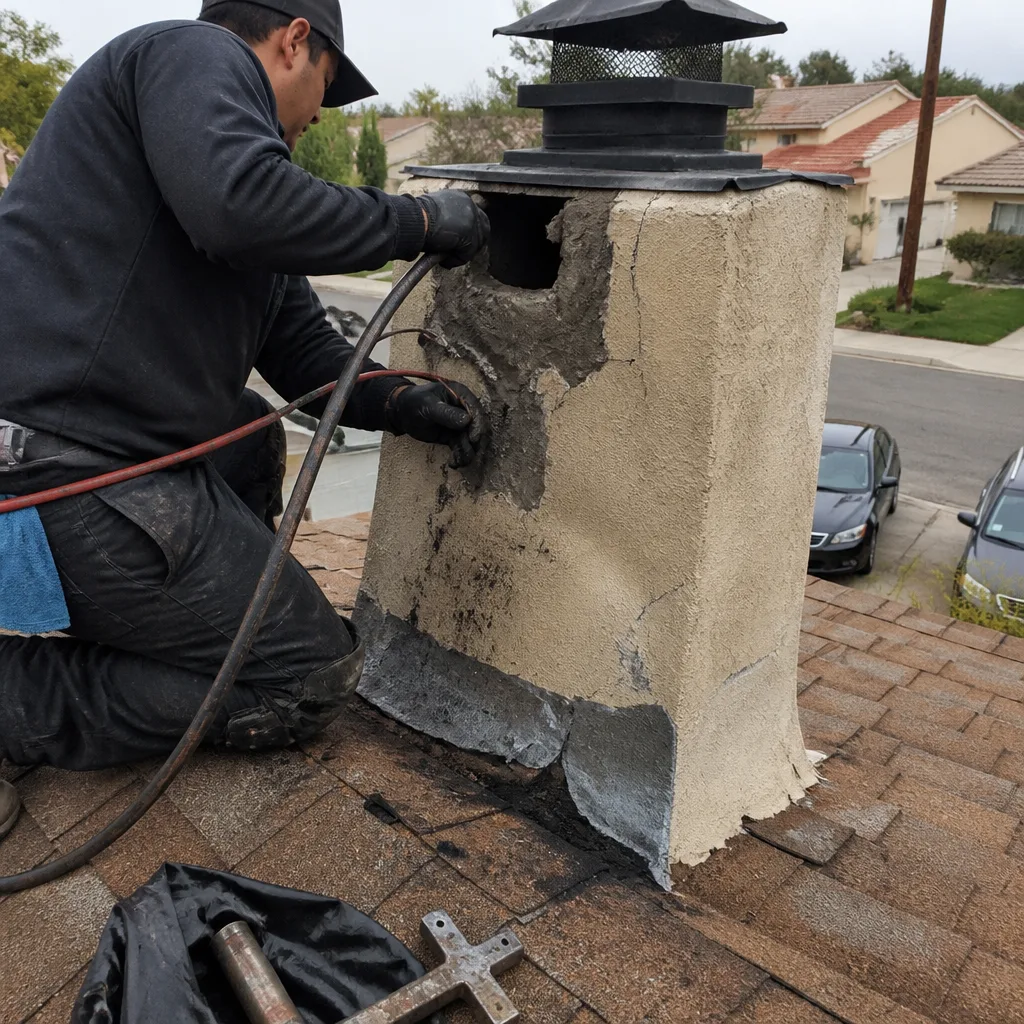 Before
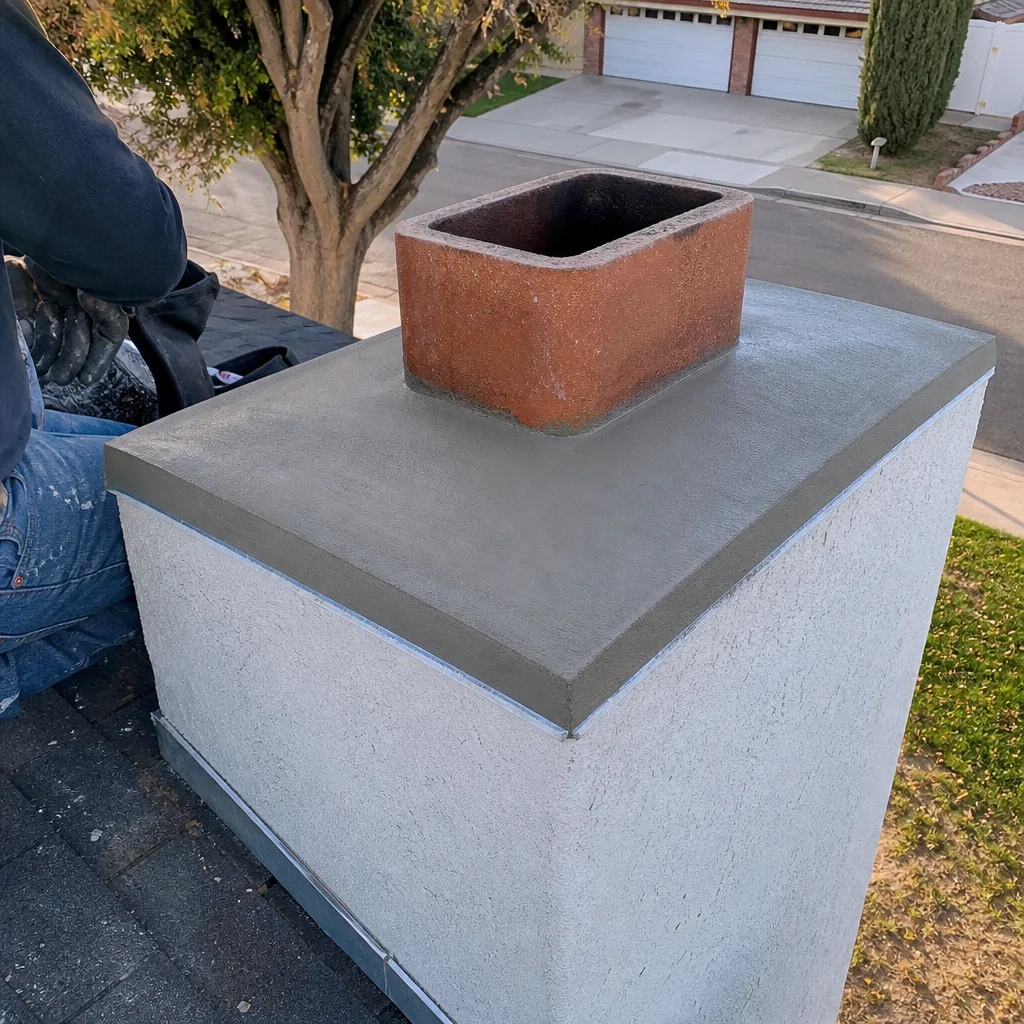 After
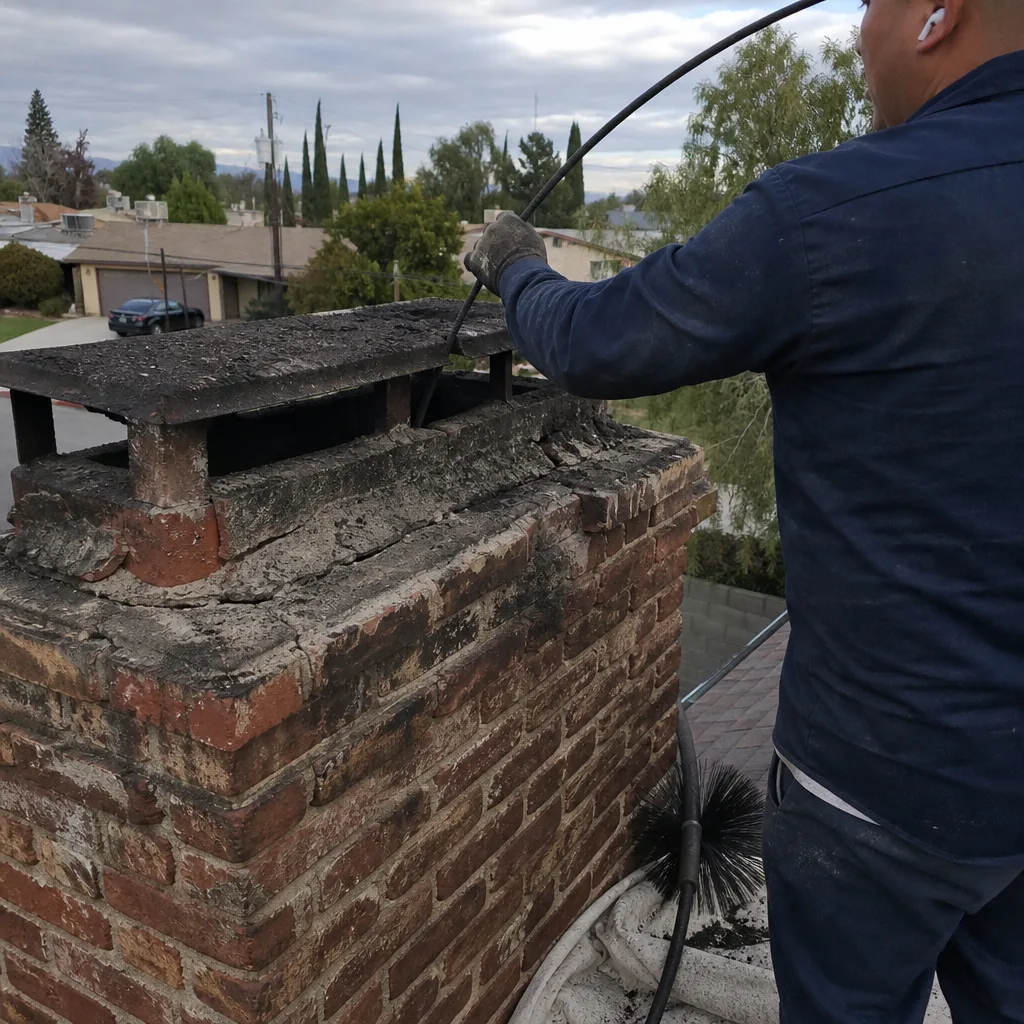 Before
 After
 Before
 After